The Ancient Secret to Focus: Why Your Projects Stall (And How to Fix It)
Most project lists fail because they treat every goal like it deserves equal urgency. This essay introduces a simple framework, Current, Future, Archived, that turns guilt into clarity and helps you focus on one meaningful project at a time.
Part 1 of 2
The Question Nobody Really Asks
A few days ago, someone asked me: “How do you get so many projects done at once? And where do you even find the time?”
I smiled. Shrugged. Gave the polite I don’t know gesture.
Not because I didn’t have an answer, but because the question wasn’t really a question. It was a passing observation.
But here’s the truth:
I don't do projects all at once. I do them one at a time. And I don't find time, I create time. And most importantly, I am honest about what each project means to me right now.
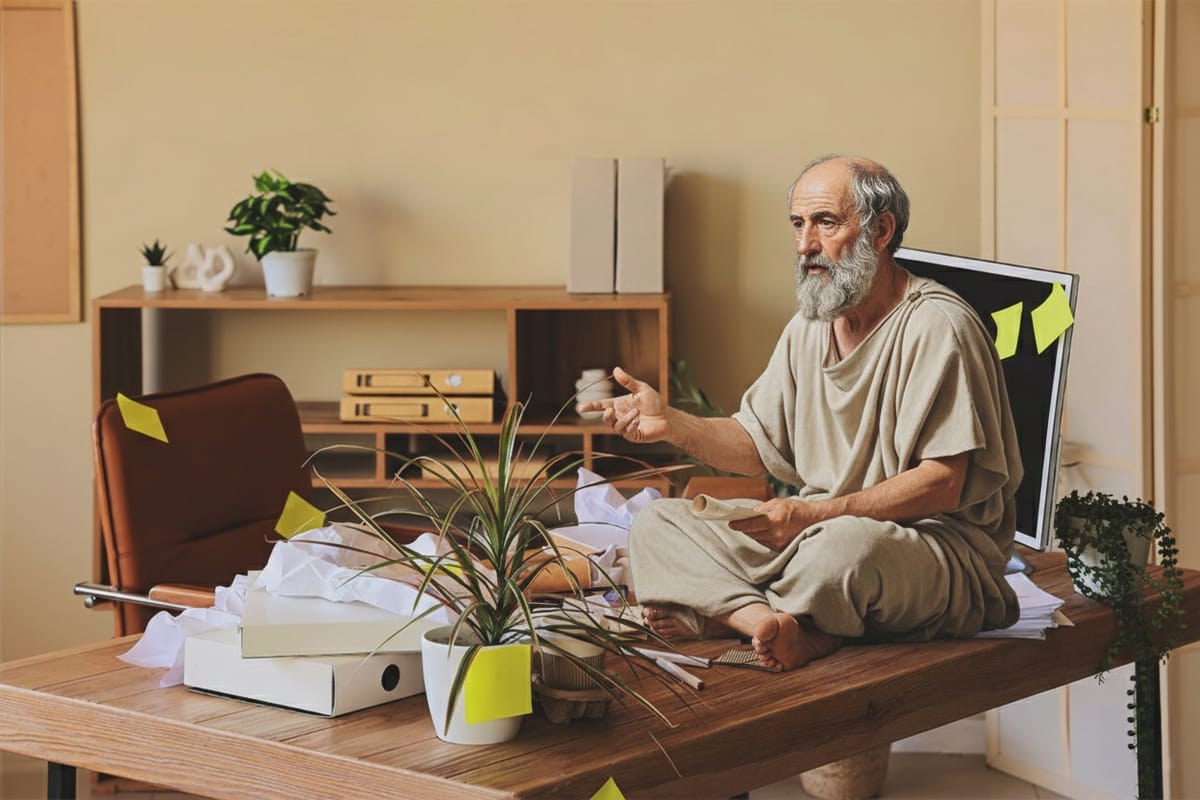
Seneca put it plainly: “It is not that we have a short time to live, but that we waste a lot of it.”
In this case, Seneca was only half right. The problem isn’t just waste, it’s misalignment. We judge ourselves by productivity metrics when we should be asking more profound questions about what we value and what’s actually possible right now.
Why Your Projects Stall (The Mistake I Kept Making)
I used to treat all my projects the same.
They’re not.
Some projects exist to be finished. Some exist to keep me connected to values I care about, even when I can’t pursue them fully. And some have genuinely run their course; they served their purpose, and now it’s time to let them go.
My projects weren’t stalling because I lacked organization. They were stalling because I was organizing the wrong things and judging everything by the same standard.
The Three Types of Projects
1) Current Projects
This is what you’re building right now. A book draft. An app launch. A skill learned to proficiency.
They require structure, dedicated time blocks, and forward momentum. You either give them real focus during this season of your life, or you recognize they need to wait until you have the capacity.
2) Future Projects
These keep you oriented toward who you want to become. The novel you’ve been “working on” for five years. The podcast you’re “planning to start.”
Here’s what took me years to understand: these projects aren’t lying to you. Sometimes they’re in genuine incubation. Sometimes they represent values you need to stay connected to, even when life circumstances make active pursuit impossible. The person who maintains creative possibilities - even slowly - is often living more fully than someone who ruthlessly culls everything not producing immediate results.
But here’s the key: Future projects need permission to exist without guilt. They need you to acknowledge:
This matters to me, and I’m keeping it visible because it represents something I value. But I’m not executing on it right now, and that’s okay.
The problem isn’t having Future projects. The problem is managing them like Current projects and then beating yourself up for not making progress.
3) Archived Projects
These have run their course. The conference tell you explored and decided against. The hobby that genuinely served its purpose for a season. I used to call these “ghost projects” and frame them as failures. But that’s the wrong approach. Some projects can be completed by not finishing them; they teach you something or simply being what you need for a while. Recognizing completion isn’t admission of failure; it’s honoring what the project gave you and making space for what comes next.
Choose Labels That Actually Help You Think
A Note on Terminology
The terminology matters less than the mental shift. Use whatever feels natural when you say it out loud:
- Active / Waiting / Complete
- Executing / Exploring / Graduated
- Focus / Compass / Archived
- Building / Seedling / Retired
The best label is the one that helps you maintain the right relationship with these projects.
The Sorting Questions That Change Everything
Here’s how I sort my projects, with curiosity rather than judgment.
Step 1: What is this project for right now?
For each project, I ask: “What is this project actually for, right now, in my life?”
Step 2: What happened in the last 90 days?
Then: “Have I engaged with this in the last 90 days, and when I did, did it feel productive or obligatory?”
- Productive and regular → Current project
- Productive but intermittent → Future project (keep visible, stop forcing)
- Obligatory or absent → Possibly Archived (what did it teach you?)
Step 3: Would keeping it visible still matter in a year?
For Future projects I ask:
“If I couldn’t work on this for another year, would keeping it visible help me stay oriented toward who I want to be?”
- Yes → Keep it, name it honestly, remove the guilt
- No → It may be Archived
Enjoying the journey so far?
If you like deep dives into creative chaos, productivity under pressure, and nerdy lessons from real-life experiments, subscribe to get future posts delivered right to your inbox. Subscribe Now
My Projects, Sorted
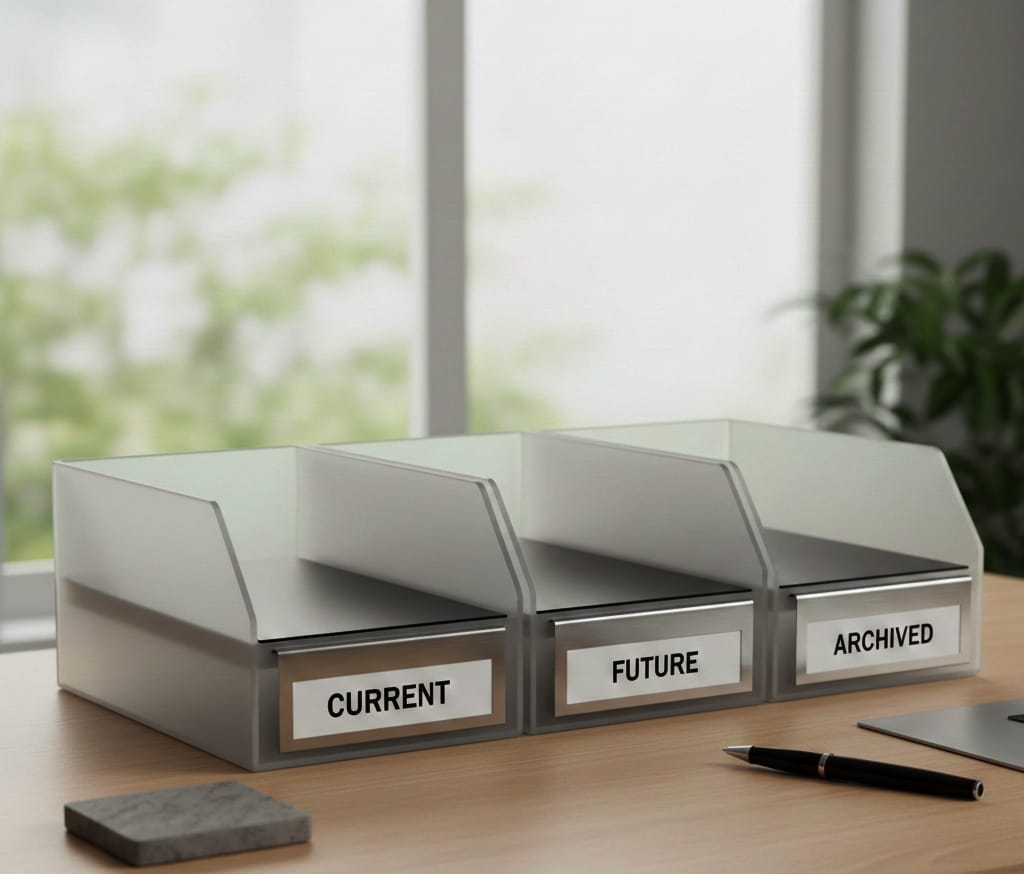
Here’s what mine looked like once I stopped judging everything by the same standard:
Current
- Motivational book (primary focus)
- Personal app (secondary)
- Weekly blog posts (rhythm work)
- Daily Sumerian practice (discipline work)
Future
- Create and publish YouTube videos
- The spy thriller
I finally admitted: I’m not actively writing the thriller right now, and that’s fine. It represents a part of my creative identity I want to preserve, the person who still thinks in stories. Keeping it on my Future list helps me stay oriented.
But I had to stop managing it like a Current project and creating guilt around it.
Archived
- A movie script I explored for three years
- A short documentary about hobbies
- Learning 3D design and 3D printing
These taught me things. The script helped me understand I’m more interested in writing novels right now. The documentary clarified what kinds of creative work energize me. The 3D design experiment showed me I prefer creating with words.
I don’t miss them. I’m grateful for what they offered.
Why This Works (Even When You’re Busy)
The deeper issue isn’t just switching between tasks. It’s switching between modes of being.
Writing requires emotional openness. Coding requires logical precision. Public thinking requires wit and concision.
These aren’t just different tasks, they’re different mental postures, different versions of yourself.
When I tried to be all of them in the same evening, my brain didn’t just get tired. It got confused about what kind of attention I was asking for.
I wasn’t lazy. I was asking myself to be four people in a three-hour window.
But once I understood which projects were Current versus Future, I stopped judging myself for not advancing everything simultaneously. I could check in briefly with Future projects, read a chapter on thriller structure, and jot down a YouTube idea, without feeling like I was failing.
Try it (Without Self-Drama)
Pull up your project list.
Step 1: Name what each project is for
Ask with genuine curiosity: “What is this project actually for, right now?”
Step 2: Archive what’s complete (and call it what it is)
Identify what might be Archived, not as failures, but as teachers. What did they offer you?
Step 3: Let Future projects exist without guilt
Name your Future projects honestly, and give them permission to exist without forcing progress.
Step 4: Pick one primary Current project
Then ask: “Given my actual capacity right now, my energy, this moment in my life, my commitments, which ONE project would benefit most from focused attention?”
That’s your primary Current project.
Everything else either supports it, waits on the Future list, or has completed its purpose and is archived.
The Real Answer (What I Wish I Learned Earlier)
My projects weren’t stalling because I lacked discipline.
They were stalling because I was trying to actively execute on Future projects, feeling guilty about Archived projects, and splitting my focus across Current projects, all at the same time, with the same tools and expectations.
I had to sort them first. Name what each project was actually for, and what it needed from me.
Because the real tragedy isn’t ambition. It’s spending years judging yourself by the wrong metrics instead of asking what each project means in this chapter of your life.
When Work and Personal Projects Collide
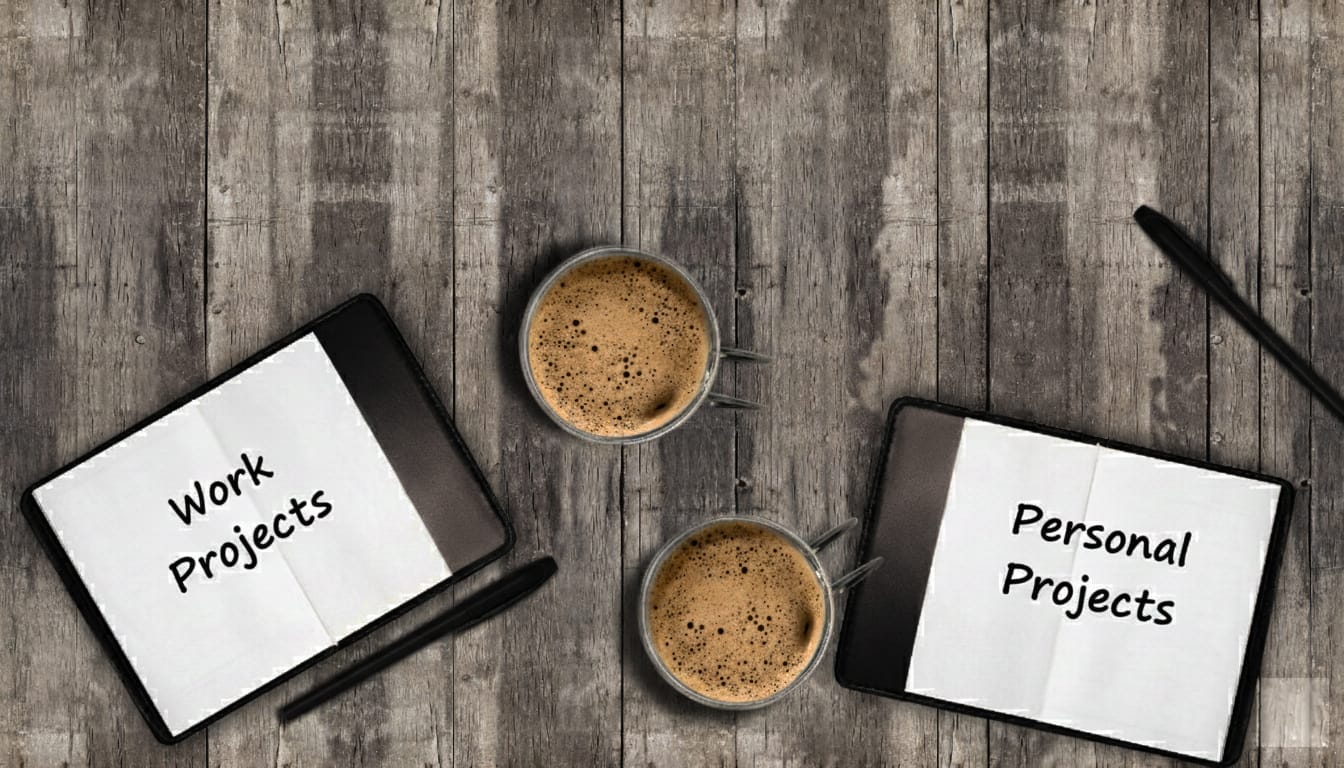
That’s a common question I get, and honestly, most people get this wrong by not separating them.
Here’s the thing: work and personal projects don’t collide; they operate in entirely different orbits. Your day job has its own gravity. Your personal projects? Those belong to you, and only you can protect them.
The real issue is that most people treat them like they’re competing for the same resources. They’re not.
Work projects come with external deadlines, accountability to others, defined scope, built-in consequences, and dedicated time that’s already blocked out.
Personal projects come with self-imposed deadlines you’ll negotiate, accountability only to yourself, endless expansion potential, consequences you get to define, and time you must actively carve out and defend.
When you mix them on the same list, you’re setting up an unfair fight. Work projects will often win because they have external teeth. Your personal Current project, the one that might matter to you long-term, gets perpetually bumped.
The Simple System I Use for Work and Life
I run the three-type sorting system in both categories but keep them separate.
Work projects
- Current: whatever has real deadlines and deliverables.
- Future: the strategic initiatives I'm interested in but did not plan time for it.
- Archived: that process-improvement doc that served its purpose as a learning exercise.
Personal projects
- Current: what I'm building right now.
- Future: what keeps me oriented toward who want i want to become.
- Archived: what taught me something and served its purpose.
Then, and this is critical, I protect one primary Current project in each domain.
One at work.
One personal.
Not five. Not “whatever fits.”
One.
One More Thing:
Don’t let work projects consume all your active energy. That’s how you end up being highly productive for your employer while your own aspirations stay frozen in “someday” mode for a decade.
If you have a personal Current project that matters, treat it with the same seriousness as your work projects. Block time. Protect it. Make it non-negotiable.
Otherwise, you’re just outsourcing all your real focus to someone else’s priorities.
Stay curious, stay nerdy, stay one project at a time.
-Ed Nite
Coming in Part 2
How I structure time and space once my projects are sorted, including how to batch by mental mode, set environmental cues, and run a 10-minute weekly reset.
What This Framework Doesn’t Cover
Your capacity changes. Illness, caregiving, grief, and major transitions.
Recalibrate based on what’s actually possible now, not what you wish were possible. Some work needs time to carry out. Creative projects and skill development don’t always show progress for months. That’s growth, not failure.
Categories can overlap. Future projects often inform Current work. The boundaries aren’t clean, and that’s fine.
Context beats willpower. If you’re still stuck after sorting, look at your environment, tools, schedule, and accountability structures, not just your commitment level.
This framework starts the conversation with yourself. It’s not a complete solution. Even though the system works for me. It might not work for you, and that’s human. The point isn’t to adopt my categories or labels. It’s about finding a clear path of thinking about what you’re actually doing and why. Use what’s useful, adapt what needs adjusting, discard what doesn’t fit.
If you like deep dives into creative chaos, productivity under pressure, and nerdy lessons from real-life experiments, subscribe to get future posts delivered right to your inbox. Subscribe Now
Disclosure: Some images in this article were modified using AI tools. The text was lightly edited for grammar and clarity with AI assistance.